
Biological Learning and Rehabilitation (BioRehab) Group — Christian Medical College Vellore
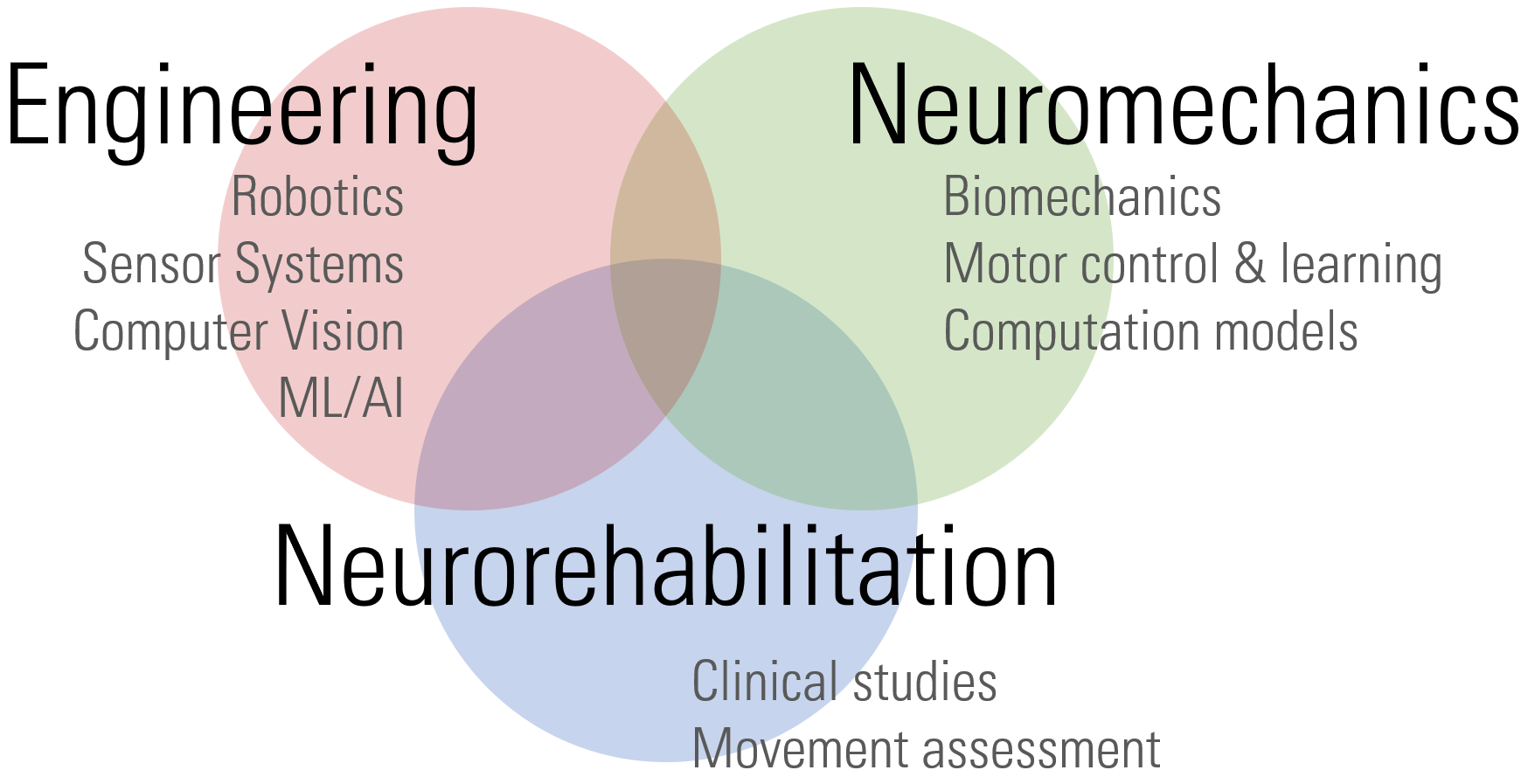
We are an academic research group in the Department of Bioengineering at Christian Medical College Vellore, working at the interface of engineering, neuromechanics, and neurorehabilitation. Our ultimate goal is to advance routine clinical practice in sensorimotor rehabilitation, improving individual patient outcomes and reducing disability.
We currently have three major focus areas:
Developing and translating clinically relevant neurorehabilitation tools
We design, build, and validate rehabilitation robots, sensor-based systems, and electrical stimulation systems for movement training and monitoring. We take them all the way from prototype through clinical use to technology transfer. The emphasis is on devices that are affordable, robust, and simple enough to work in hospitals, clinics, and homes.
Rigorous methods for quantitative human movement assessment
We develop and validate measures and algorithms that turn raw kinematic and kinetic data into meaningful numbers. Our work on quantifying movement smoothness is a good example of this. A major current focus of the group is the mathematical foundations of sensorimotor measurement — building a rigorous framework for conceiving, developing, and understanding measures of sensorimotor performance.
Mechanistic models and precision neurorehabilitation
Neurorehabilitation is still largely a black box, and there is a growing call for more theory in the field. Better theory would not only deepen our understanding of how these interventions work, but also make them more precisely targeted in clinical practice. We are working towards causal mechanistic models of technology-driven interventions, so they can be tailored to the individual patient.
We are always looking for motivated MS or PhD students interested in our research. You can also get involved through internships and project staff positions — see the Join Us page for details.
News
- Oct 31, 2026Farewell and Best Wishes to Monisha!
- Oct 6, 202616th Annual Research Day Awards, CMC Vellore
- Aug 7, 2026VIT - BioMET'26 Awards
- April 12, 2026IFNR Annual Conference Awards
- Feb 5, 2026NOARK technology transfer!
- Nov 3, 2025Congratulations to Dr. Monisha Yuvaraj!